
Serving Coeur d’Alene, Post Falls, Hayden, Spokane, and the surrounding North Idaho and Eastern Washington communities.
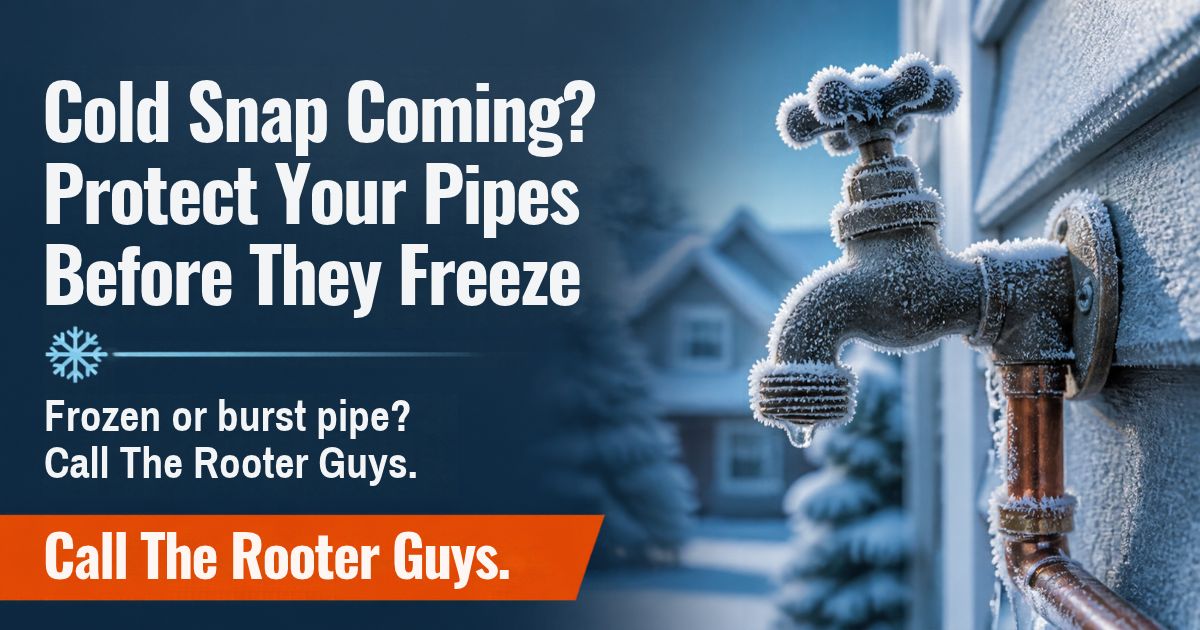
The first real cold snap of the year always brings the same calls. A pipe in a crawlspace or outside wall freezes overnight, and by morning there is water coming through a ceiling. Most of those calls could have been avoided with an hour of prep.
We fix frozen pipes in Coeur d'Alene and across North Idaho every winter. Here is what we tell our own customers: how to keep pipes from freezing, how to spot a frozen line, and what to do if one freezes or bursts.
Why Pipes Freeze in North Idaho and Spokane Winters
Our winters are not just cold, they are cold for a long stretch. Lows in the teens are normal from December through February, and an arctic front can push temperatures below zero for days. A pipe on an exterior wall can freeze even when the thermostat inside reads 68 degrees.
Water expands about 9 percent when it freezes. Once an ice plug forms, pressure builds between the ice and the closed faucet until the pipe splits. The split usually stays hidden while the line is frozen. When it thaws, water starts flowing through the crack, often inside a wall, under a floor, or in a crawlspace where nobody is looking.
The pipes most at risk are the ones near cold air: crawlspace lines, garage lines, pipes in exterior walls, kitchen and bathroom sinks on outside walls, and outdoor spigots. The American Red Cross frozen pipe guide points to the same trouble spots.
How to Prevent Frozen Pipes in Coeur d’Alene: 6-Step Checklist
1. Keep the heat at 55°F or higher
Never let the house drop below 55°F, even when you are away. That includes cabins and rentals between tenants.
2. Open sink cabinets on exterior walls
Kitchen and bathroom sinks on outside walls sit in a closed, unheated cabinet. On nights below 20°F, open those cabinet doors so warm room air can reach the pipes.
3. Drip faucets on the coldest nights
Let the faucets farthest from where water enters your home run at a slow drip, both hot and cold. Moving water is much harder to freeze, and an open faucet relieves pressure if ice starts to form.
4. Disconnect hoses and cover outdoor spigots
A hose left on the spigot traps water in the faucet and the pipe behind it. Disconnect every hose, drain it, and store it. Shut off the interior valve for outdoor lines if you have one, open the spigot to drain it, then put an insulated foam cover over it. Our guide to winterizing outdoor faucets walks through each step.
5. Insulate crawlspace and garage lines
Foam pipe sleeves are cheap and take minutes to install. Cover any exposed pipe in the crawlspace, garage, attic, or unheated basement. Close crawlspace vents for the winter and seal gaps where cold air gets in around pipes, dryer vents, and cable lines. For lines that freeze every year, heat tape rated for pipes is worth the cost.
6. Know where your main shutoff is
Find your main water shutoff now, before you need it. It is usually in the basement, crawlspace, garage, or utility room near where the water line enters the house. Make sure it turns, and show everyone in the house where it is.
Signs a Pipe Is Frozen
- You turn on a faucet and get nothing, or only a slow trickle.
- Frost on an exposed pipe, or a pipe that feels ice cold.
- A toilet that will not refill after flushing.
- Bulging or wet spots on drywall near a pipe.
If only one fixture has no water, the freeze is likely on the line to that fixture. If the whole house is dry, the problem may be at the main line where it enters the home.
What to Do If a Pipe Is Frozen
- Open the faucet. Leave the affected faucet open so water can flow out as the ice melts and pressure has somewhere to go.
- Find the frozen section. Start near the faucet and work back toward the cold area: an outside wall, crawlspace, or garage.
- Apply gentle heat. Use a hair dryer, a space heater kept at a safe distance, or towels soaked in hot water. Warm the pipe starting from the faucet end and work toward the frozen section.
- Never use an open flame. Torches, propane heaters, and charcoal stoves can start a fire inside a wall and can damage the pipe itself.
- Keep heating until full pressure returns, then check the line for leaks.
If you cannot find the frozen section, cannot reach it, or the pipe is inside a finished wall, stop and call a plumber. Forcing it can cause the exact break you are trying to prevent.
What to Do If a Pipe Bursts
- Shut off the main water valve right away. This is why knowing where it is matters.
- Turn off the water heater if you have shut off the water supply, so it does not run empty.
- Open faucets to drain the remaining water from the lines and relieve pressure.
- Turn off power to wet areas if water is near outlets, fixtures, or the electrical panel. If it is not safe to reach the breaker, stay out of the area.
- Start cleanup. Move belongings, mop up water, and take photos for your insurance company.
- Call a plumber to find and repair the break before you turn the water back on.
When to Call a Plumber
Call us if a pipe has burst, if you cannot locate or safely thaw a frozen line, if the whole house has lost water, or if you see water stains or hear dripping inside a wall after a freeze. Hidden leaks are common after a thaw, and our leak detection service can find them before they turn into mold or rot.
We handle frozen and burst pipes day and night through our 24/7 emergency plumbing service, and our pipe repair team can replace damaged sections or reroute lines that freeze every winter. Homeowners in Coeur d'Alene, Post Falls, Hayden, and Spokane can call us any time.
Frequently Asked Questions
At what temperature do pipes freeze?
Pipes can start to freeze once the outdoor temperature stays at or below 20°F for several hours, especially pipes in crawlspaces, garages, and exterior walls. Wind and poor insulation make it happen sooner.
Should I drip my faucets every night in winter?
Not every night. Drip the faucets farthest from your main line, hot and cold, on nights when the low is near 20°F or below, and on any faucet whose pipes run along an outside wall.
Will a frozen pipe always burst?
No, but the risk is high. Many frozen pipes thaw without damage, but the pressure from ice can crack a pipe without any sign until the water starts flowing again. Check for leaks after any freeze.
Does homeowners insurance cover burst pipes?
Most policies cover sudden damage from a burst pipe, but may deny claims if the home was left unheated or the problem was neglected. Check your policy and take photos of any damage right away.
Frozen or Burst Pipe? Call The Rooter Guys
If you are dealing with either one, call us and we will talk you through what to do while our crew heads your way.